For Annette Wagner, a pediatric dermatologist from Glen Ellyn, a sudden, ripping pain in her chest during a workday turned into a fight for her life. The sensation signaled an aortic dissection that spanned the entire length of her primary artery, leading to emergency surgery, a period on life support, and a coma. While the trauma was immense, it served as a harrowing catalyst for her children to confront a hidden danger they had known about since their youth but had largely pushed to the periphery of their minds.
The culprit is Loeys-Dietz Syndrome, a rare genetic disorder that compromises connective tissue and leaves the aorta vulnerable to fatal ruptures. Decades prior, Annette had helped researchers track down this specific mutation after her own brother suffered a similar cardiac event at age 38. Although genetic testing later confirmed that three of her six children also carried the mutation, it took seeing their mother nearly die for them to realize they could not afford to wait for symptoms to appear.
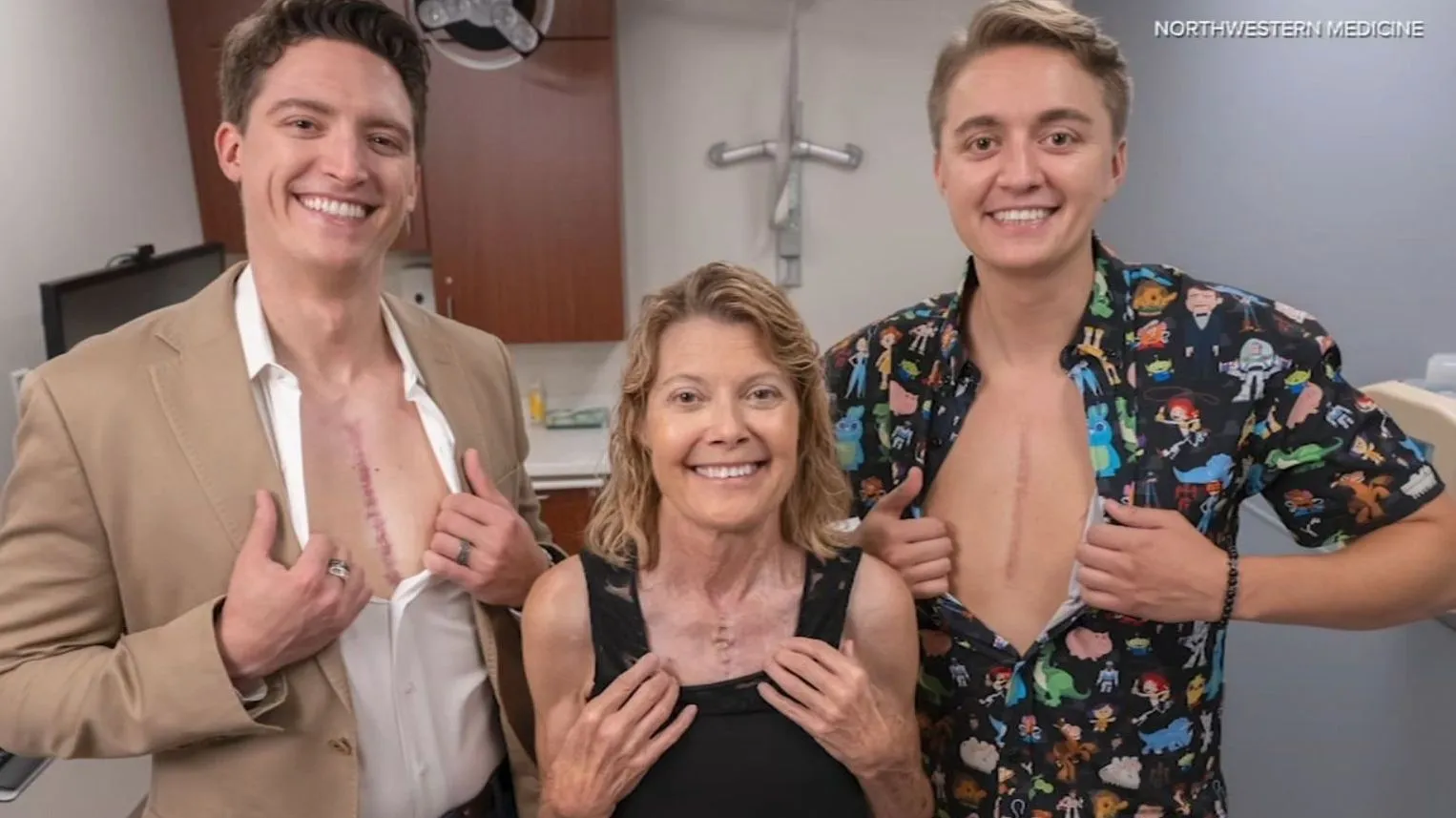
Within six months of their mother’s crisis, three of Annette’s adult children—Charles, Gavin, and Kirstin—underwent elective open heart surgeries to repair aneurysms before they could burst. Dr. Christopher Mehta of Northwestern Medicine described the situation bluntly, noting that without intervention, the siblings were essentially ticking time bombs. By choosing preventive surgery over uncertainty, the trio transitioned from living in fear of a spontaneous catastrophe to recovering with peace of mind.
Now recovered and returning to their active lives, the Wagners view the surgical scars on their chests not as reminders of illness, but as badges of survival. As they look toward future holidays together, they hope their story prompts other families to have difficult but necessary conversations about medical histories. With lighthearted resilience, some of the children have even joked about getting matching zipper tattoos over their incisions to commemorate the shared journey that ultimately saved four lives.